Nick:
As Bob Dylan's recent 70th birthday has shown us, Dylan's cultural worth is as high as any living artist's. It's hard to fathom the reason why this is. Don't get me wrong, I'm a Dylan nut. I've read various books, seen all the documentaries. I crucially own most of the records and have seen him live a few times. Could Dylan represent our last view of the genuine Outlaw? As affluent society becomes blander, does Dylan represent our last real comment on the way things are/were? This hero status, cultural value and sense of political belonging are just some of the themes that Haynes tries to tackle in his picture of Dylan's many lives in I'm Not There.
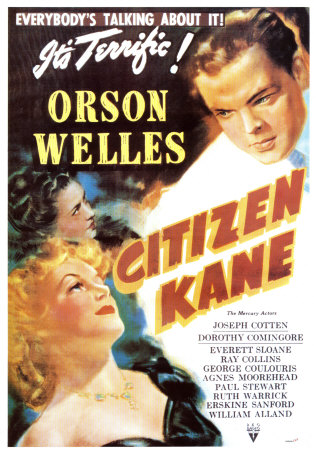
Various actors play Dylan at various stages of his life, under various pseudonyms (mainly of Dylan's own name or Dylan song characters). Most people just offer direct impersonations (Cate Blanchett, Christian Bale, Ben Whishaw), while the other Dylans offer a more dramatic and speculative retelling of chapters of Dylan's life (Heath Ledger, Marcus Carl Franklin and Richard Gere). As a side note, Bale and Ledger add a surreal sense of viewing a rock'n'roll Batman movie, so fresh is the memory of their The Dark Knight. Unlike his previous, confused Glam Rock film Velvet Goldmine, Haynes doesn't use a Citizen Kane type investigative frame for his picture, which does benefit I'm Not There. What he does use to reveal his view of Dylan is found material. Whether it's from the two D.A. Pennebaker documentaries on Dylan, Don't Look Back and Eat The Document or Martin Scorsese's documentary No Direction Home, I'm Not There basically has the actors re-creating scenes from these documentaries with some added Dylan lyric as dialogue. And this is my main problem with the film. The real events of I'm Not There are so well documented and viewed, I've no need actually to see Blanchett as the Electric Dylan, however well Haynes recreates Dylan's mid-1960's period.
The other major flaw for me is that so much documentation of Dylan is hearsay, which Haynes buys into. We really don't know for sure if Dylan had a motorcycle accident which forced his mid-1960's retreat or even if he had a poisonous affair with Edie Sedgwick. We only know any intimacies of Dylan's marriage breakdown with Sara Lownds through his Blood On The Tracks album. And that's the real fascination with Dylan. After all the books, movies, records and documentation on his life, we're no closer to knowing who he really is or what informs the man's art. It's that mystery that keeps us interested and wanting to know more. And this is where I'm Not There, for all its faults as a bio-pic, works – it features the man's music. Cover versions or Dylan's originals, the secret to who Dylan is, lies in his music. I'm Not There creates a potent visual setting for the songs, and makes you want to go back to the records. I enjoyed this movie still, being such a Dylan follower. A more apt title for Haynes' picture might have been : I'm Not Here, Maybe, Positively, Who Knows, You Work It Out.
Astrid:
I'm Not There is a great idea. I prefer the thoughts it provokes to the film it becomes. It takes the Bob Dylan imagery and mythology and jumbles everything up to question cohesive identity or linear narrative. I'm Not There might be a theory, or an attempt to apply a theory over a piece of art. There is something so cerebral about the film, it is as if the thinking is there to hide the fan-boyish basis for making the movie.
It's impossible not to be a Bob Dylan fan. Not appreciating Bob Dylan comes across as ignorance these days. Hating Bob is a futile attack on the cultural history of the 20th century. Bob won't go anywhere as a result. So, choosing a perspective is a preferable alternative: which period is your favorite? Which look, which album, which girlfriend rumor, which religion, which style of singing? Like I'm Not There points out, Bob can represent almost any cause or identity – it's all in the interpretation.
Despite my love for the deconstruction of a coherent self, my favorite storyline in I'm Not There is the most conventional relationship tale: Charlotte Gainsbourg and Heath Ledger as a sort of version of Bob with Sara. There the film becomes more than a parody of previously seen scenes of interviews, or other iconic images. There you can forget for a while about Bob and just enjoy the acting, the great sets and style, and feel something. In the end, the best introduction to Bob Dylan this movie offers, are the scenes where his original music is performed by himself.